

1. Introduction and Strategic Context The training activity held in Cikembang Village, Kertasari District, Bandung Regency, is not merely a routine meeting, but an integrative strategy to address ecological and economic challenges in West Java. The primary motivation for this initiative is the urgent need to balance the ecological functions of forests with the economic well-being of local communities. The Kertasari region currently faces development dynamics and population growth that trigger land-use changes, where dry land, fields, and plantations dominate the landscape, often neglecting conservation aspects.
At a macro level, this activity is a manifestation of Indonesia’s national commitment towards FOLU (Forestry and Other Land Use) Net Sink 2030. Within this framework, agroforestry is positioned as a key instrument to transform the forestry sector into a net carbon sink by increasing carbon stock in vegetation and soil. At the local level, LPHD Wanajaya was selected as a priority partner based on spatial analysis, ensuring that interventions are carried out in areas that legally have social forestry permits but are ecologically critical and require restoration.
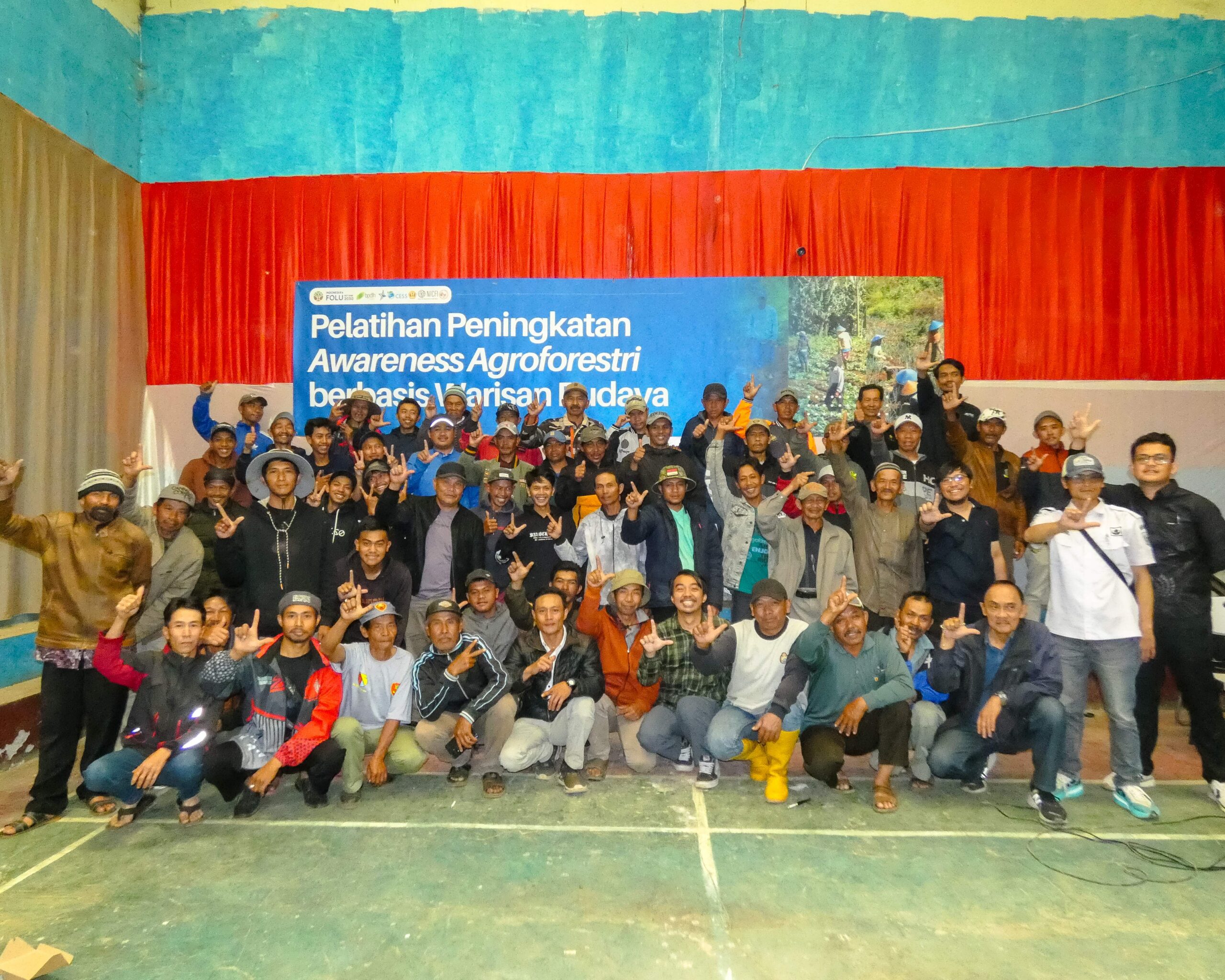
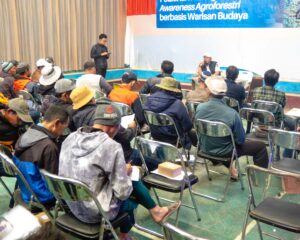
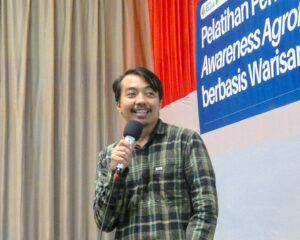
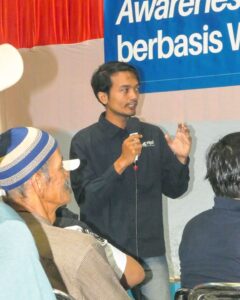
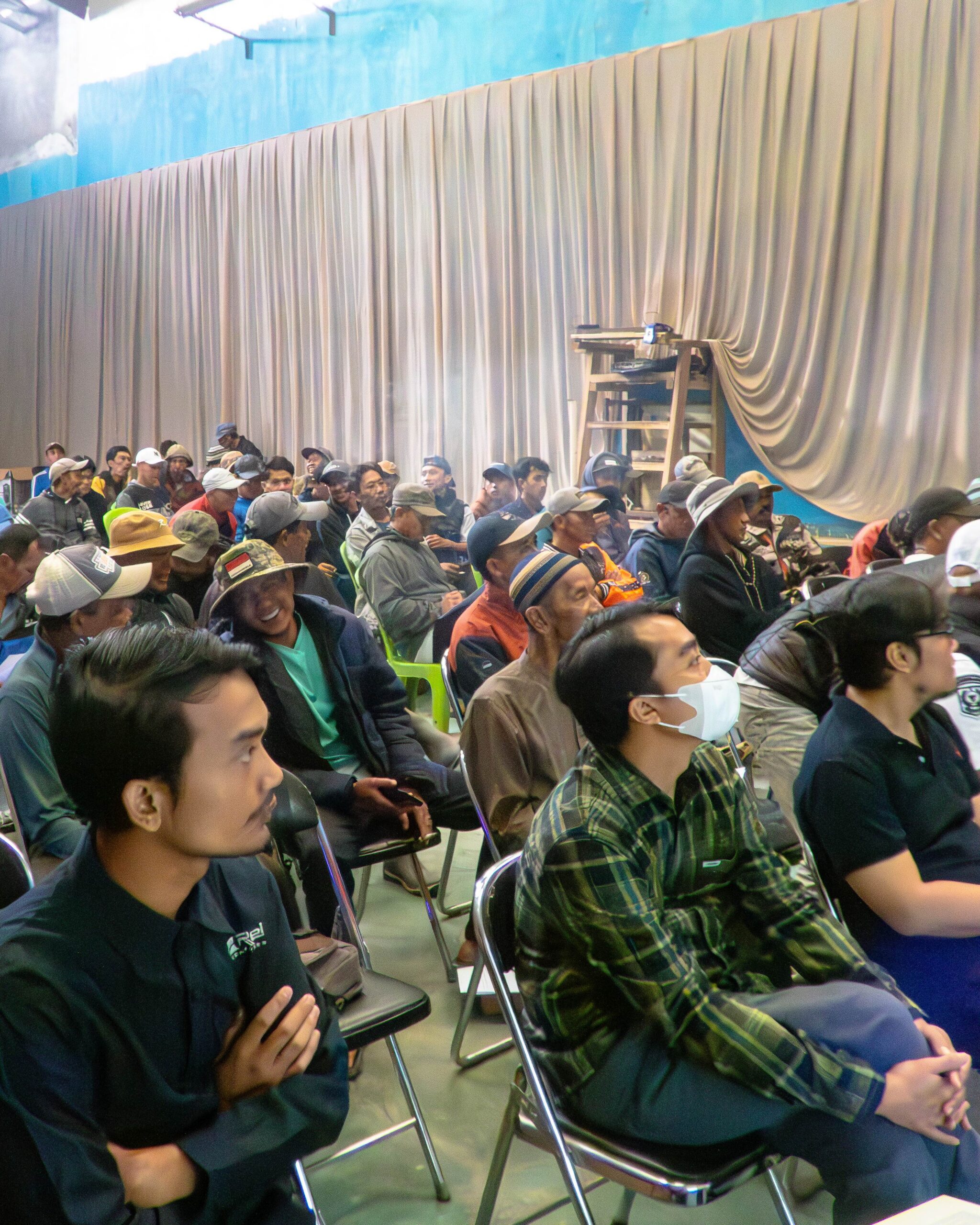
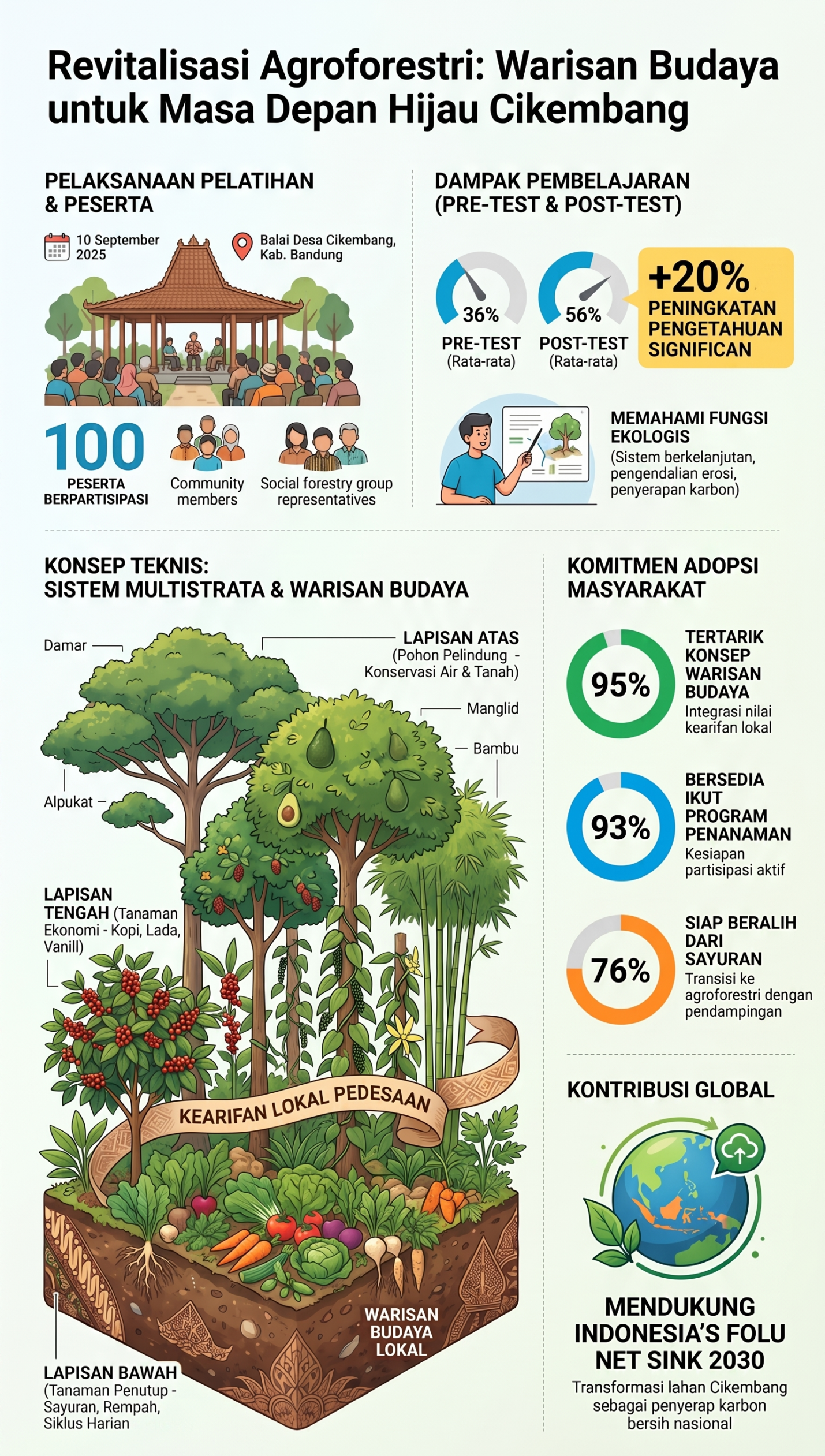
2. Activity Implementation and Methodology The training was conducted on Wednesday, September 10, 2025, at the Cikembang Village Hall. A total of 100 participants attended, consisting of members of the Social Forestry Group (KPS) and local community leaders who play a central role in landscape management. Although the inclusivity target set female and youth participation at 20-30%, the actual realization in the field only reached 15%, indicating challenges in information dissemination at the level of certain community groups.
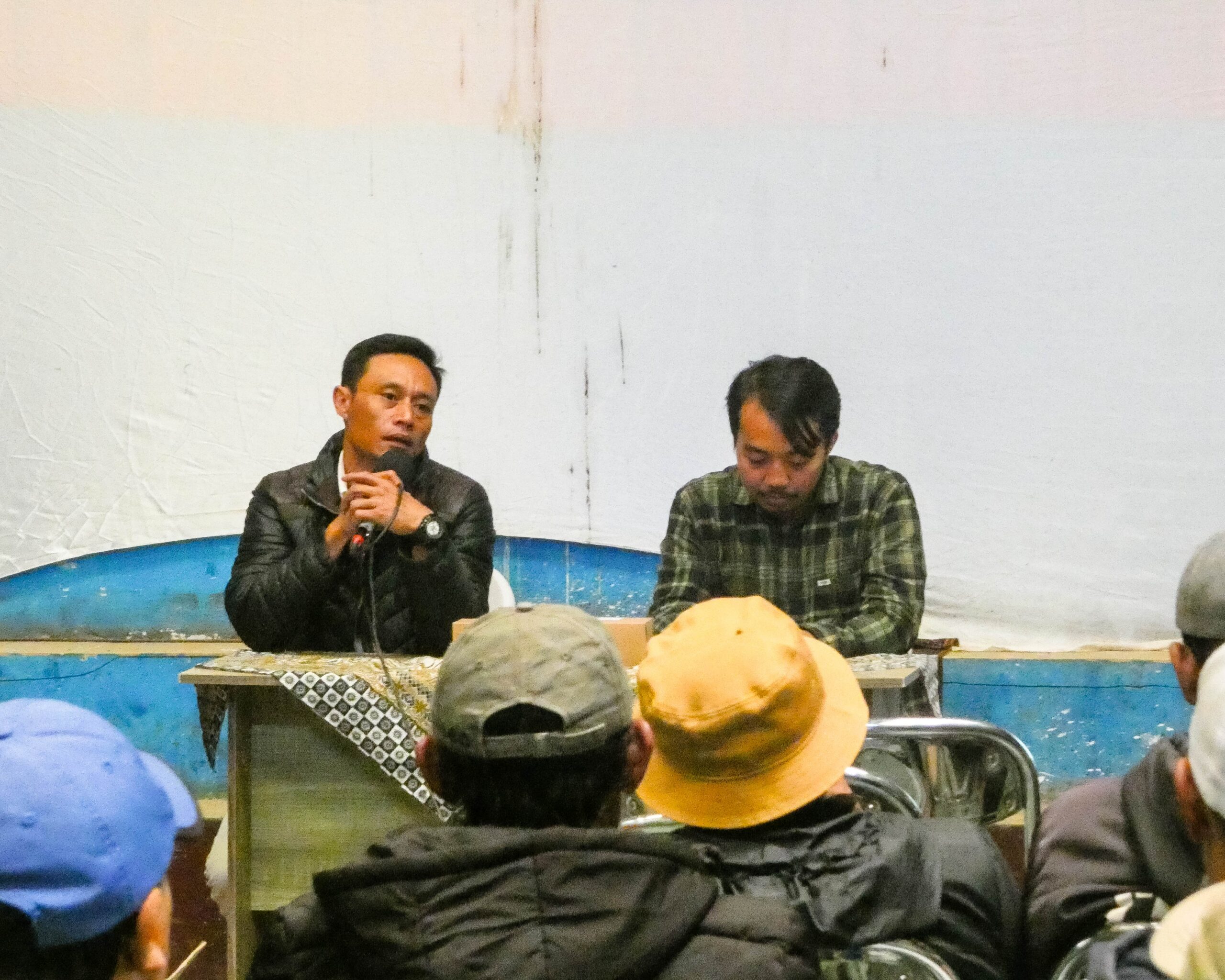
The training methodology utilized a one-group pretest–posttest design. The event began with a pre-test to measure participants’ baseline knowledge, followed by two main material sessions:
3. Technical Substance: Multistrata Agroforestry and Cultural Concepts One of the most important achievements of this training was the participants’ understanding of the multistrata agroforestry system. This concept divides land use into vertical layers that mimic the structure of natural forests:
This approach is deliberately linked to “Cultural Heritage” because the Cikembang community has traditionally been familiar with mixed cropping patterns. By integrating cultural values such as gotong royong (mutual cooperation) in planting and musyawarah (deliberation) in profit sharing, this program aims to strengthen social capital and the community’s sense of ownership over the land they manage.
4. Results Analysis: Cognitive Capacity Improvement Evaluation data shows very positive results. Participants’ knowledge significantly increased by 20 percentage points, from an average initial understanding of 36% (pre-test) to 56% (post-test). Before the training, the majority of farmers only viewed agroforestry as a simple mixed cropping system without realizing its ecological functions. After the training, they began to be able to identify the benefits of this system in:
Although the increase was substantial, the report notes that participants’ understanding is still at a conceptual stage and has not fully reached an applicative level. Participants still require technical assistance in terms of planting space planning, maintenance schedules, and more detailed economic productivity calculations.
5. Evaluation of Motivation and Adoption Commitment (Conative) This report highlights the extraordinary level of community enthusiasm, measured through four key indicators of willingness:
6. Conclusion and Recommendations for Next Steps LPHD Wanajaya concludes that this training has successfully built a solid initial foundation across three layers: Cognitive (knowledge), Affective (interest/motivation), and Conative (readiness to act). The Cikembang community has now reached a stage of readiness for change, where they are prepared to transition from destructive monoculture farming patterns to a sustainable agroforestry system.
However, long-term success heavily depends on the sustainability of post-training interventions. The report recommends several crucial follow-up steps:
Thus, this initiative in Cikembang Village is expected to become a replication model for other regions in West Java, making a real contribution to forest conservation while enhancing the economic resilience of communities based on local cultural heritage.
The complete activity report can be downloaded via the following link: