

Coffee has long been the economic heartbeat of the communities in the South Bandung mountains. However, for many smallholder farmers like Usep Sirod, the manager of KUPS Mencil Lestari, their position in the coffee value chain is often at the weakest point. They plant, harvest, and work hard, yet the greatest added value is enjoyed by others. It was from this restlessness that this journey of change began.
Through a local commodity-based community empowerment program initiated by Universitas Padjadjaran in collaboration with IWF as part of the FOLU Net Sink 2030 Norway Contribution (NC) 2&3 Program, this journey of change has begun to find its way.
Do Not Let This Coffee Only Benefit Others
Throughout various parts of the conversation, there was one sentence that Pak Usep repeatedly uttered—a simple yet sharp reflection:
“Do not let this coffee only benefit others, while we as farmers do not reap the rewards.”
For him, the success of the coffee business should also be the success of the village community. There were several things he desired from the start:
That hope grew amidst the limitations of tools, labor, and market access that had long made them feel as if they were running in place.
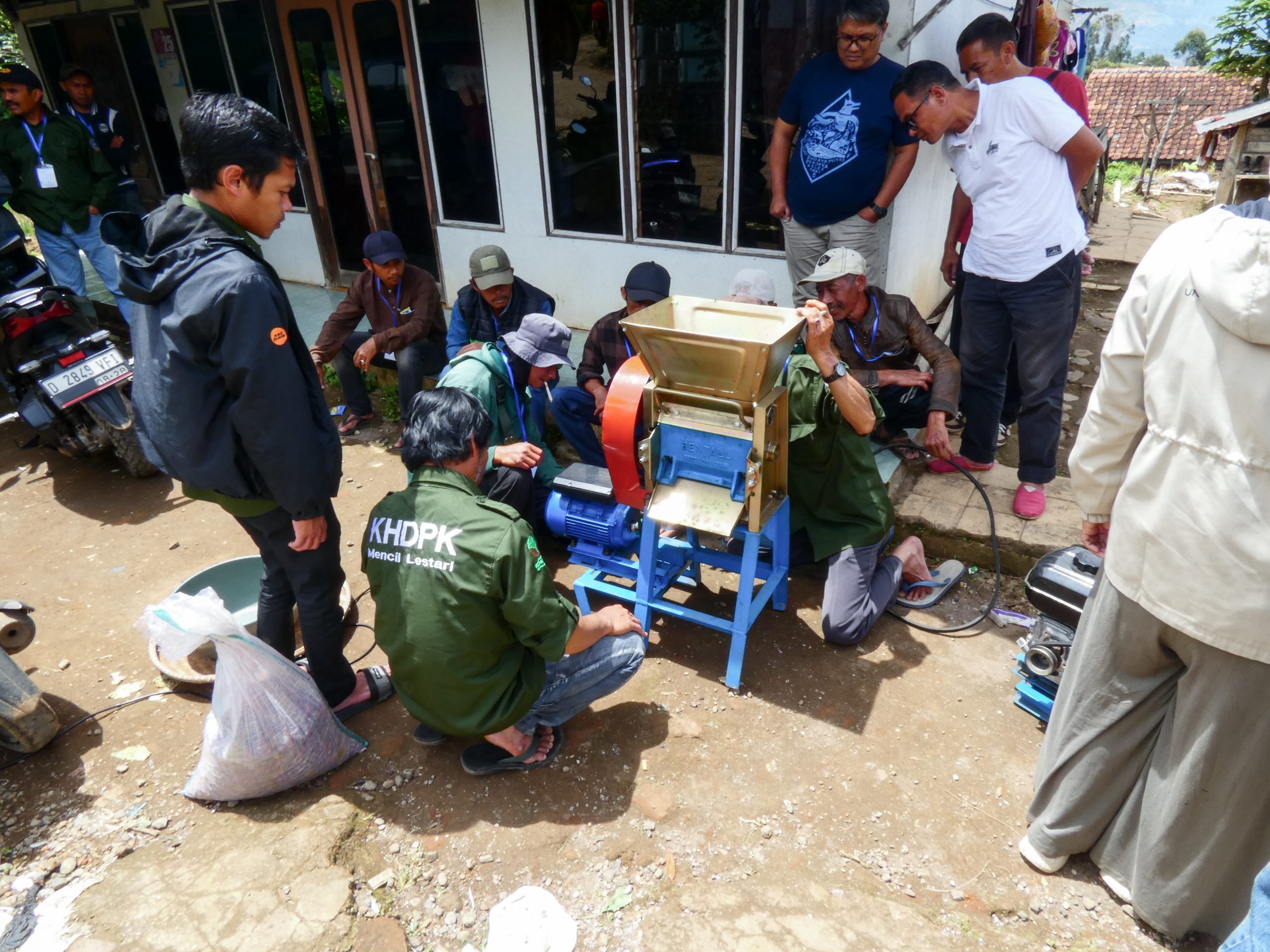
Everything changed when machinery assistance—pulpers, hullers, roasters, and other processing equipment—arrived in their village through the support of Universitas Padjadjaran (UNPAD) and FOLU Net Sink 2030 NC 2&3. Processes that usually required significant labor and cost suddenly became more streamlined and affordable.
“Since these machines arrived, thank God, everything has become easier,” said Pak Usep.
The previously manual system began to shift toward a more productive direction. Whereas they previously had to travel far just to mill coffee cherries, everything can now be done in their own village. Efficiency has increased, time has been saved, and transportation costs have been reduced.
Figure 1. Pak Usep Sirod, Member of the Mencil Lestari Social Forestry Group (KPS)
However, for Pak Usep, what left the deepest impression was not just the practicality of the machinery:
“What was most memorable is that I never expected to have machines like these. Once UNPAD got involved, the process didn’t take long, and suddenly the machines arrived. It felt like a dream to me.”
Within that simple sentence lies the realization that small interventions can bring about significant changes for smallholder farmers.
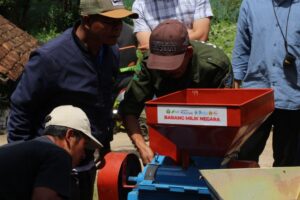
Figure 2. The Mencil Lestari Social Forestry Group (KPS) and Social Forestry Business Group (KUPS) Receiving a Grant of Coffee Processing Machinery
Machinery is only one side of the change. Far more important is the mentorship that came with it: training, discussions, and guidance on how to build a coffee business more professionally.
“The activities consist of various training sessions. In terms of sales, I haven’t been able to expand further because the official permits are not yet in place,” he explained.
This is where new challenges arise. Farmers like Pak Usep realize that processing coffee is not just about production techniques, but also about business legality, branding, quality standards, and marketing—things they had never touched before.
“Since that assistance arrived, there has been progress. However, I am asking for support to help market our coffee, so we are not struggling on our own.”
It is this mentorship that has changed their perspective from “traditional farmers” to “coffee entrepreneurs.” And the most tangible change is not just technical, but also mental:
“Now I feel more confident. Because I feel I am not walking alone. There is support.”
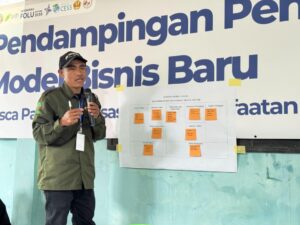
Figure 3. Implementation of New Business Models (Post-Harvest, Downstreaming, and Coffee Waste Utilization)
From Cherry Seller to a Pillar for Other Coffee Farmers
The most significant transformation experienced by Pak Usep is the change in his role within the coffee supply chain.
Whereas he previously only sold cherries, he now processes his own coffee. Even further:
“Now I can take in coffee from outside, from other farmers as well.”
This is no small change; it is a leap in position:
The machinery assistance and mentorship have ultimately created a double effect: strengthening Pak Usep’s business with KPS Mencil Lestari while simultaneously building a new center of gravity for the local coffee network.
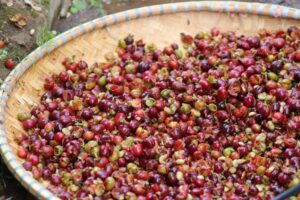
Figure 4. Coffee Cherry Husks, a Product of the Mencil Lestari Social Forestry Group (KPS)
Throughout many parts of the interview, Pak Usep repeatedly expressed his gratitude:
“I would like to express my gratitude for the assistance. May everything that has been done be a blessing.”
Yet that gratitude is always followed by hope:
“Moving forward, I hope the support from UNPAD and FOLU Net Sink 2030 RBC 2&3 can continue. If there is further assistance, hopefully, it can address more of the group’s needs.”
This is the core of the transformation he wishes to see: not individual change, but community change.
Pak Usep’s story shows that changes in the smallholder coffee value chain do not always start with large investments. Sometimes, they are born from a combination of simple tools, the right mentorship, and a farmer’s courage to dream further.
Through hands like Pak Usep’s, the future of West Java’s smallholder coffee is being reshaped—fairer, stronger, and more deeply rooted in those who have cared for the coffee beans since they were first planted.