

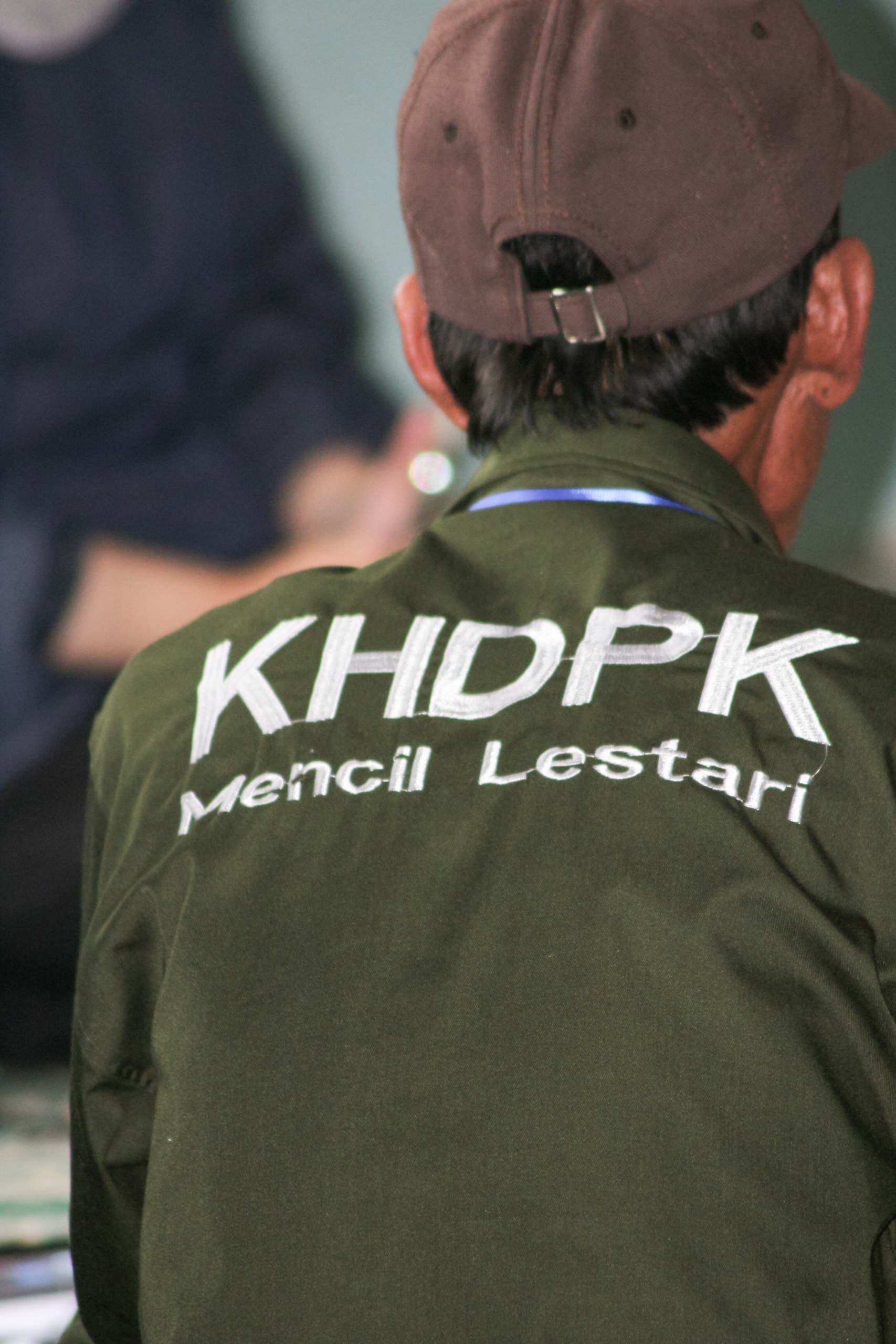
At the foot of Mount Wayang, the village of Cihawuk preserves a long-standing tradition that is finding new relevance in a modern context. Here, the community uses the term “jersi,” short for jejar di sisi—a traditional practice of planting trees along the edges of farmland while using the central area for food crops. Today, this time-honored approach is recognized by its modern name: agroforestry, an integrated land-use system that combines trees with agricultural crops and serves as a key component of the FOLU Net Sink 2030 program in West Java.
“In the past, we didn’t know the term agroforestry. But after the recent training, we realized that what our ancestors have practiced for generations is, in fact, agroforestry,” said Mr. Soleh, a member of the KTH Mencilestari management team, with a proud smile.
Not far from the same location, Mr. Sholihin, a member of the KPS Mencilestari management team, echoed a similar message:
“In terms of planting methods and farming patterns, what we’re doing is essentially the same as what our elders practiced. The difference is that today we must protect it more seriously, because this forest is not only our heritage—it is our future.”
Figure 1. Mr. Soleh, Management Member of the Mencilestari Forest Farmer Group (KTH)
The Cultural Heritage-Based Agroforestry Training, organized by Padjadjaran University in collaboration with the FOLU Norway Contribution (NC) 2&3) program, marked a turning point for the local community. The training sessions, delivered by facilitators such as Kang Oji, Mr. Firman, and Mr. Gilang, were met with great enthusiasm by participants.
The training went beyond theory. It became a bridge connecting two complementary forms of knowledge: academic science and local wisdom.
“The term agroforestry sounded unfamiliar to us at first. But when it was explained that it is similar to our traditional jersi system, everyone immediately understood,” said Mr. Soleh.
This approach aligns with the principles of knowledge management: recognizing the knowledge embedded within communities and transforming it into shared practice. In the context of Cihawuk, that knowledge extends beyond tree planting—it is also about cultivating a shared sense of responsibility and collective stewardship.
Because there are already quite a lot of quotations above, could this paragraph provide an overview of what materials were presented by the three speakers?
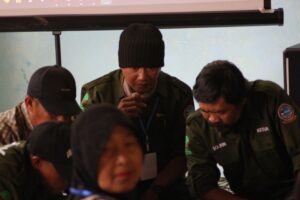
Figure 2. Cultural Heritage-Based Agroforestry Awareness Program in Cihawuk Village
Both institutions, KTH Mencilestari and KPS Mencilestari, have now become key drivers of community collaboration. For Mr. Soleh, strengthening these institutions has also increased community confidence. “Now the community is more familiar with our KTH. Our hope is not only to be recognized at the village level, but also to go international,” he said.
Meanwhile, for Mr. Solihin, the most tangible benefit is strengthened solidarity. “What I gained from this training is not only knowledge, but also stronger ties among community members. We now have 13 active KUPS, and we are beginning to move forward with greater confidence together,” he said.
This training demonstrates that forest management is not merely a technical matter. It is about the interconnectedness of people, nature, and cultural values. Sundanese wisdom—silih asah, silih asih, silih asuh—is revived in the form of ecological cooperation and mutual support. The forest is protected not only because of regulations, but because of a shared awareness that its sustainability reflects collective well-being.
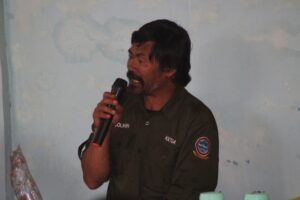
Figure 3. Mr. Solihin, Management Member of the Mencil Lestari Forest Farmer Group (KTH)
In their conversations, both Soleh and Solihin repeatedly emphasized the importance of learning from the past. “In the past, our parents planted avocado trees and other fruit crops. Today, many have shifted to vegetables. But the principle remains the same: the forest must be protected,” said Solihin.
This approach opens the way toward a culturally rooted agroforestry model—an effort to integrate ancestral practices with modern innovation. The traditional jersi system is now translated into a multi-strata planning approach: timber and perennial trees such as resin, bamboo, and avocado in the upper layer; coffee, banana, or citrus in the middle layer; and horticultural crops in the lower layer. The result is not only ecological balance, but also new economic potential for local communities.
Both Soleh and Solihin recognize that the future of forest management lies in the hands of the younger generation. “In the past, our parents were only focused on production. Today, young people can handle digital marketing. Sales are simpler and more promising,” said Solihin.
This idea reflects a shift in mindset: forests and their products are no longer only protected, but also developed creatively. Through digital marketing—from WhatsApp catalogs to online marketplaces—young people can transform forest coffee, wild honey, or avocados into higher-value products.
“If young people are trained and mentored properly, the results will definitely be better,” he added.
The involvement of the younger generation demonstrates that conservation can function simultaneously as a social and economic trend. In Cihawuk, the green economy is no longer just a slogan; it has become part of farming families’ strategies to survive and grow.
For the people of Cihawuk, the philosophy of forest conservation cannot be separated from human well-being. “It is meaningless if the forest is green but the community is not prosperous,” emphasized Solihin.
This perspective reinforces that true conservation must integrate ecological and socio-economic dimensions. A forest that is preserved but leaves its surrounding community unprosperous becomes an empty space, lacking real meaning.
Both figures also highlight the importance of sustained support. “If possible, the program should not end with training. We need assistance for the next three years—from planting to marketing,” said Solihin.
This statement aligns with knowledge management principles that emphasize continuous learning—where field-based learning is continuously documented, refined, and updated to generate living knowledge that evolves over time.
The Cihawuk community does not wish to move forward alone. They hope for cross-sector collaboration—bringing together government, academics, donor institutions, and local communities—to support the sustainability of the program.
“We are grateful to Universitas Padjadjaran for this training. But we also hope for continued support from the village, district, and national government. This is not the responsibility of a few individuals; it is the responsibility of the entire Cihawuk community,” said Solihin.
For Soleh, the training serves as a concrete example that empowerment is not an abstract concept. “Documentation, reflection, and sharing experiences like this are important so that what we learn is not lost, and can also be used by other communities,” he said.