


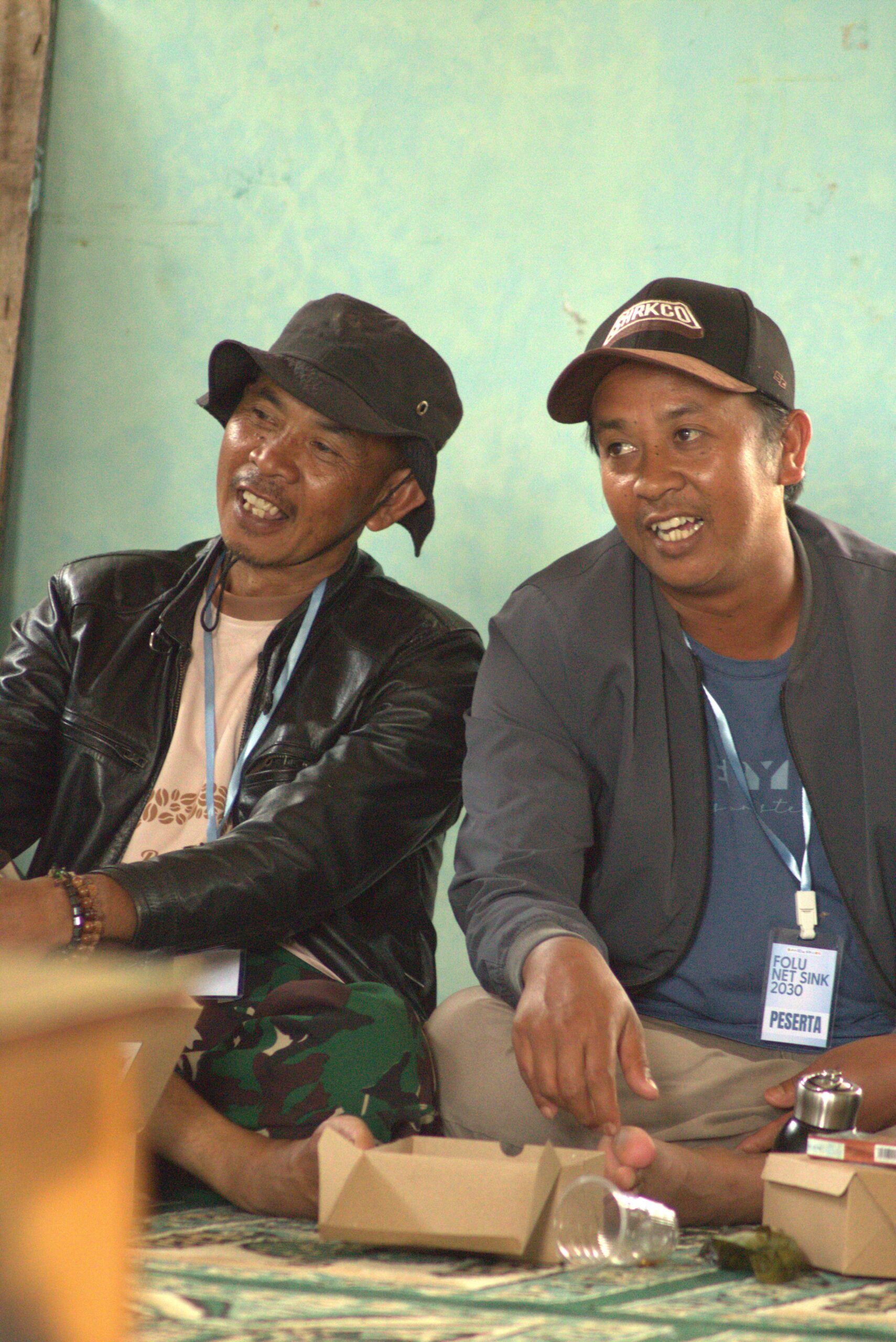
On the slopes of Cihawuk, the coffee season is marked by more than just ripening red cherries. It is also defined by farmers carrying their harvests, by calculations to meet their families’ needs, by offers from middlemen, by increasingly unpredictable weather, and by a community group gradually working to transform coffee from a raw commodity into a product with greater value.
For many years, Cihawuk coffee has followed a familiar path for local farmers: sold as coffee cherries, quickly converted into cash, and immediately used to cover daily needs. The process is practical, but it has not always placed farmers in a strong bargaining position. When urgent expenses arise, some farmers may even borrow money from middlemen before the coffee has begun to bear fruit. By the time the harvest arrives, their choice of whom to sell to is no longer entirely their own. In this context, the challenge of coffee extends beyond production—it is also about access to capital, markets, trust, and bargaining power.
Amid these challenges, Mr. Sholihin, Chairman of KPS Mencil Lestari, sees signs of gradual change taking root. He does not describe it as a major success already achieved. Instead, he speaks of it as an ongoing process: from manual methods to mechanized processing, from coffee cherries to green beans, from parchment coffee to roasted beans, from bulk coffee to packaged products, and from limited knowledge of coffee varieties to a growing understanding of processing methods such as Full Wash, Natural, Wine, Honey, and Semi-Wash.
Coffee Cherries, Middlemen, and the Cycle of Quick Cash
Before coffee processing became more established within KPS, selling coffee cherries was the most common choice. For farmers, cherries provided quick cash flow. The coffee was harvested, sold, and the proceeds could immediately be used to cover daily household expenses. From the perspective of farming families, this speed was essential. Not every household had the financial flexibility to wait through the longer post-harvest processing stages.
However, speed often comes at the cost of limited value addition. When coffee is sold as cherries, most of the subsequent stages—processing, drying, sorting, roasting, packaging, and marketing—are handled by others. As a result, much of the added value moves beyond the farmers’ reach. Farmers remain at the very beginning of the value chain, yet they do not fully benefit from the returns generated further downstream.
Mr. Sholihin understands this reality. He explains that middlemen continue to play a significant role because they are able to meet farmers’ most immediate financial needs. KPS has not always been in a position to provide the same support. For that reason, transforming the coffee value chain cannot rely solely on encouraging farmers to sell to the cooperative. KPS must also strengthen its capacity to purchase coffee, offer better prices, build trust, and provide services that give farmers a sense of security.
This is what makes the transformation in Cihawuk so complex. It is not merely about replacing one buyer with another, but about rebuilding a system that has long kept farmers dependent on traditional market channels.
From Full Wash to Ground Coffee
One of the most noticeable changes, according to Mr. Sholihin, has been the growth of technical knowledge. In the past, coffee was primarily understood as cherries to be sold. Today, the cooperative has become familiar with a range of processing methods, including Full Wash, Semi-Wash, Natural, Honey, and Wine. These are more than just new terms—they have introduced a deeper understanding that coffee’s flavor, quality, market value, and target market are all greatly influenced by how it is processed.
With the introduction of machinery, tasks that were once labor-intensive have become much easier. Mr. Sholihin recalls that, in the past, the pulping process for Full Wash coffee was sometimes done by stomping the cherries inside sacks. Today, machines have made the work far more efficient. This technological improvement has enabled the cooperative to move further up the value chain—not only selling coffee cherries, but also processing them into green beans, roasted beans, and eventually packaged ground coffee.
“In the past, we only sold coffee cherries. Now, with the equipment we have, we can produce and experience a variety of coffee products,” he said.
This statement captures the essence of the transformation. Cihawuk no longer sees coffee merely as a harvested crop, but as a product with multiple stages of value. Each stage offers greater potential, but also demands new skills. Producing high-quality green beans requires careful processing and drying. Roasted beans depend on proper roasting techniques. Ground coffee, meanwhile, requires consistent flavor, the right grind size, attractive packaging, clear labeling, and effective marketing.
The transformation may not yet be large in scale, but its direction has clearly changed. From coffee cherries to packaged products, KPS is steadily learning to take control of more stages of the coffee value chain.
Empowering Farmers, Not Just Buying Their Coffee
Mr. Sholihin emphasizes that the equipment owned by KPS is not intended solely for himself or the cooperative’s management. He hopes the community understands that these facilities are meant to support the overall development of Cihawuk, not just KPS or specific farmer groups. For him, the true purpose of the cooperative’s work lies in empowering the community.
One example Mr. Sholihin highlights is the cooperative’s purchasing price. When local collectors buy coffee at a certain price, KPS strives to offer farmers a slightly higher one. The goal is not simply to maximize profits, but to ensure that coffee farmers also benefit from the transaction. In Mr. Sholihin’s view, if the cooperative can secure a sufficient volume of coffee, it does not need to earn a large margin on every kilogram. A modest margin, combined with higher volumes, can still generate enough income to support the cooperative’s operations.
The cooperative is also beginning to develop an institutional approach to equipment services. Fees for using the roaster, pulper, or huller can be recorded and allocated to the cooperative’s operational fund. This fund is essential for ensuring the long-term maintenance and repair of the equipment when needed. In this way, KPS is evolving from simply being a recipient of machinery into a steward of shared community assets.
However, this path requires discipline. Farmer records must be maintained, seasonal production volumes need to be documented, and every batch of coffee delivered to the cooperative should be properly recorded. As the cooperative grows—whether in dealing with taxation, legal compliance, or expanding into new markets—reliable data will become an essential foundation. This is also the message Mr. Sholihin shares with other KUPS groups: comprehensive records of farmers and production are indispensable.
Finding the Right Market Remains a Challenge
Although significant progress has been made, Mr. Sholihin acknowledges that the next major challenge is the market. The cooperative is now able to produce coffee products, and efforts are underway to improve packaging, but one fundamental question remains: where should these products be sold?
He emphasizes the need for continued support beyond production. What the cooperative needs now is guidance in finding customers, understanding social media, using platforms such as Instagram and YouTube, and promoting Cihawuk’s distinctive coffee through digital channels. As someone from a rural community, he openly acknowledges that he is not yet fully familiar with digital marketing. Precisely for that reason, he hopes for continued mentoring and direction in this area.
This critical reflection is an important one. Many community empowerment programs come to an end once a group has learned how to produce. Yet production without access to markets can become a new burden. The cooperative may work harder, but its products are not necessarily sold. The machines may be running, but the cash flow may remain unstable. Packaging may be improved, but customers do not automatically follow. For this reason, business development support must go beyond technical training—it should extend from production to market access, from packaging to sales strategies, and from products to consumers.
For KPS Mencil Lestari, another challenge is that not all coffee produced by local farmers is marketed through the cooperative. A portion still moves through traditional channels. This is a natural part of the transition, but it should also be understood as an institutional challenge. KPS must demonstrate that selling through the cooperative offers clear, transparent, and sustainable benefits for its members.
Changing Weather, Uncertain Seasons
In Cihawuk, coffee is also understood through the rhythm of the seasons. Mr. Sholihin explains that the main harvest typically takes place around the sixth month of the year, although harvest times vary with elevation. Situated at more than 1,600 meters above sea level, Cihawuk follows a harvest calendar that does not always align with lower-altitude coffee-growing areas.
However, he also observes that the weather has become increasingly unpredictable. In the past, a dry season lasting five to six months would trigger a uniform flowering period across the coffee trees. Today, new shoots and flower buds can begin to emerge just a few months after harvest. As a result, coffee is now produced in small quantities throughout much of the year rather than in a single, well-defined season. This shift highlights that coffee management is challenged not only by market conditions, but also by growing climate uncertainty.
In the context of agroforestry, understanding these changing seasonal patterns is essential. Farmers need knowledge that combines local experience with updated technical information. They understand the signs within their coffee fields, but they also need support to adapt to changing microclimates, improve crop management, optimize shade and water management, and adjust harvesting practices. If coffee is to remain a sustainable source of income over the long term, coffee farms must be viewed not merely as production sites, but as living systems that require continuous care and stewardship.
Cihawuk Coffee Must Build Its Own Identity
Mr. Sholihin hopes that Cihawuk coffee will develop a distinctive identity of its own. He recognizes that conventional coffee can compete in broader domestic and export markets. At the same time, he wants Cihawuk coffee to reflect the character of its place of origin—not simply as coffee grown in Cihawuk, but as a product that carries the story of Cihawuk itself.
This aspiration is fundamental to strengthening the coffee value chain. Local products become more competitive when they have a distinct identity—one rooted in their origin, processing methods, flavor profile, farmers’ stories, landscape, and social and ecological values. Cihawuk possesses all of these elements. Its coffee is grown on highland slopes. A local cooperative is steadily expanding its processing capacity. Modern equipment is now available. Generations of manual production experience remain an important part of its heritage. And the transition from selling coffee cherries to producing packaged coffee reflects a broader ambition: for farmers to become more than suppliers of raw materials, and instead play a greater role in creating and capturing value.
For development partners, universities, government agencies, buyers, and technical advisors, Mr. Sholihin’s message is clear. Support should extend beyond production to include market access, branding, digital marketing, production record-keeping, access to finance, and stronger cooperative governance. KPS also needs continued support to become a trusted hub for local farmers—not merely a place where processing equipment is located. When farmers experience tangible benefits, they are more likely to market their coffee through the cooperative. And when the cooperative can process and sell coffee effectively, a greater share of the added value can remain within the Cihawuk community.
The transition from coffee cherries to packaged products is far more than a simple change in processing. It represents a shift in farmers’ position within the value chain—from supplying raw materials at its beginning to participating in the stages where greater value is created. Achieving this transformation requires more than equipment; it demands technical knowledge, market access, reliable data, and trust. On the slopes of Cihawuk, that journey is only just beginning. Not all coffee is yet marketed through the cooperative. Not every market has been reached. Not every system is fully established. But the direction is clear, and a new path is beginning to take shape.
From the red cherries that were once quickly sold as raw coffee, new possibilities are now emerging: green beans, roasted beans, ground coffee, branded packaging, and a stronger story of origin. If this path continues to be nurtured, Cihawuk coffee will be known not only for where it is grown, but also for the cooperative’s determination to reshape its value chain—ensuring that what once left the community as a raw commodity can return as greater dignity, stronger cooperative resources, and a more equitable future for the farmers who cultivate it on their own land.