Harmonizing Culture and Nature: Strategic Steps by Kubang and Mekarmulya Villages Toward Indonesia’s FOLU Net Sink 2030
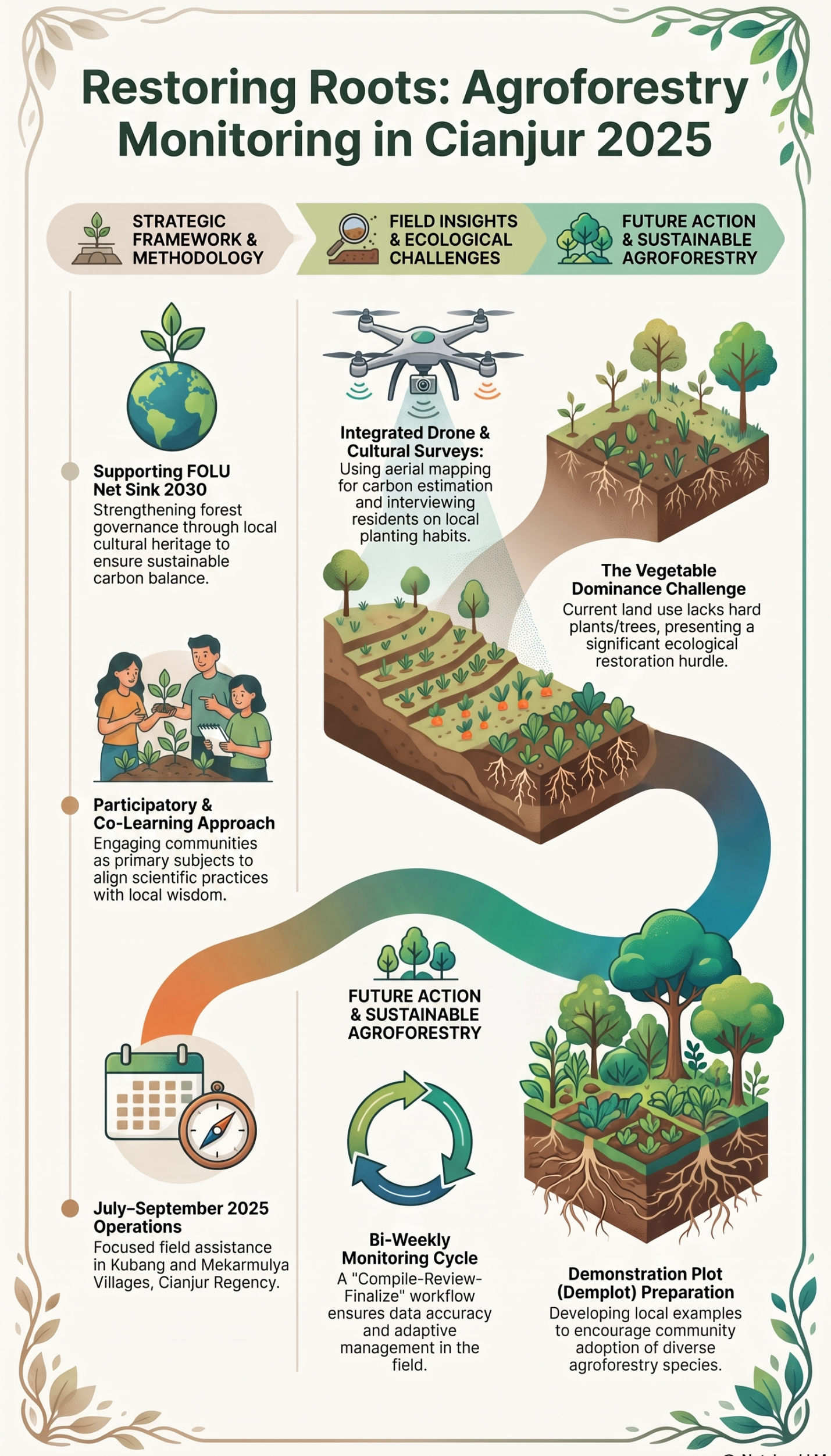
1. The Big Vision: Addressing the Global Climate Change Challenge The Culture-Based Agroforestry Revitalization Program in Kubang and Mekarmulya Villages, Sukaresmi District, Cianjur Regency, is an integral part of national efforts to achieve Indonesia’s FOLU Net Sink 2030 target. This ambitious target positions the forestry and other land-use sector as a net carbon sink by 2030. Achieving it requires strengthening forest and land governance through a strategic local approach so that rehabilitation efforts are not only technically effective but also socially sustainable. This program positions agroforestry as a key instrument to strengthen ecosystem resilience, maintain carbon balance, and reinforce the community’s role as guardians of adaptive land practices.
Conceptually, the agroforestry being implemented is not merely ordinary tree planting, but a sustainable land management system that integrates trees with agricultural activities to generate broad ecological benefits, such as soil and water conservation, increased biodiversity, and improved microclimate. From a socio-economic perspective, this system aims to increase land productivity, diversify farmers’ income, and strengthen local food security. Integrating this approach with local cultural values is considered crucial for strengthening community identity and enhancing the community’s (sense of ownership) of the program.
2. Methodology: Principles of Participation and Co-Learning Assistance in Kubang and Mekarmulya Villages is carried out using a participatory and co-learning approach responsive to the local context. This approach positions the community as the primary subject in land management, while facilitators act as knowledge liaisons who align scientific practices with local wisdom. Through village deliberations, focus group discussions (FGDs), and field visits, each stage is designed to open an equal dialogue space to map needs and set shared priorities.
The co-learning component is operationalized through an open learning cycle: starting from concept presentation, field practice, to reflection and design adjustment. The community’s traditional knowledge of planting calendars, plant species preferences, and local regulations is gathered and combined with modern soil and water conservation principles. As a result, this agroforestry practice is not imposed from outside, but “grown” from local habits that have proven adaptive, increasing the potential for wider community replication.
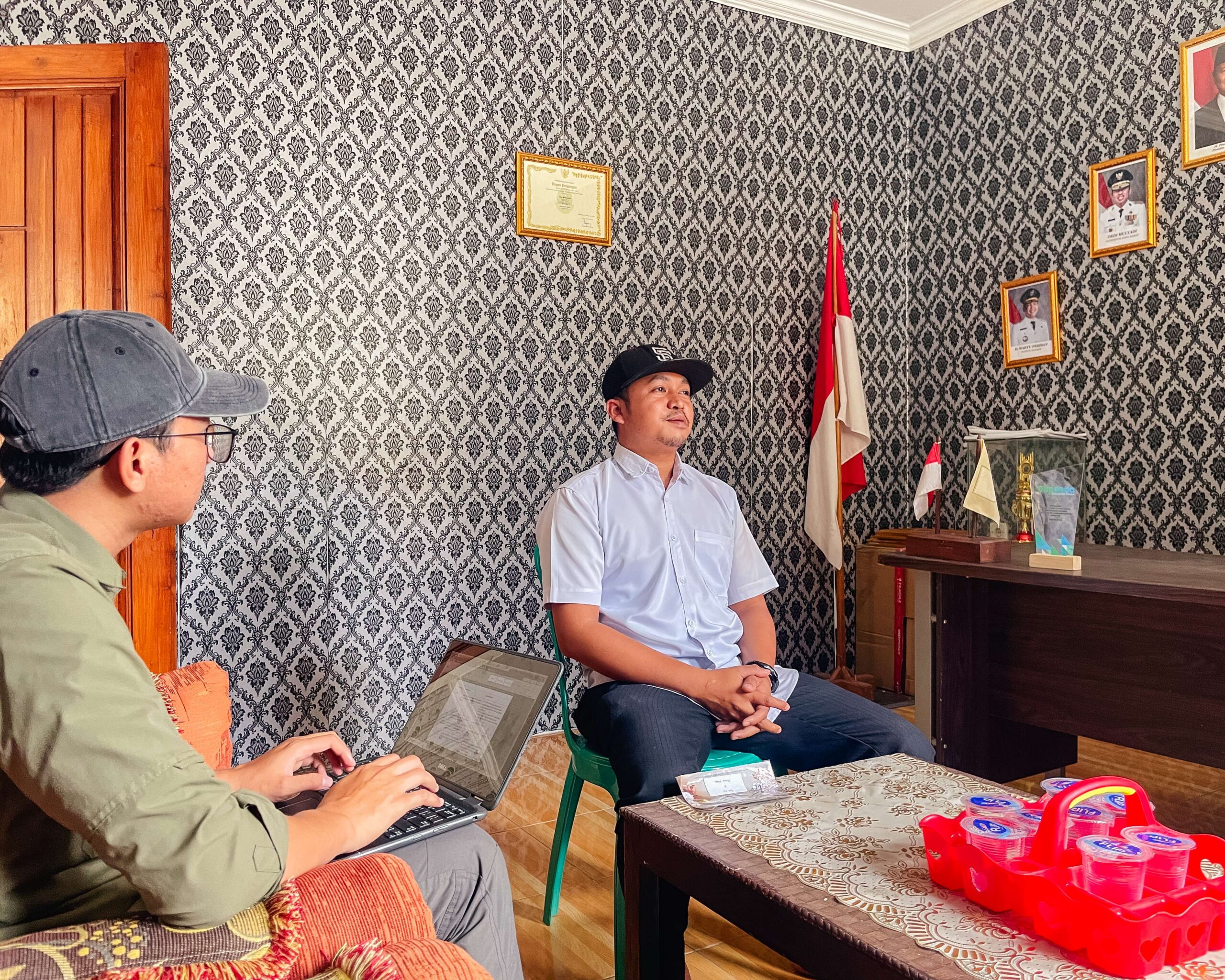
3. Initial Implementation Phase: Socialization and Community Acceptance (August 2025) Field activities during the July to September 2025 period began with intensive coordination with the village government and Farmer Group (KPS) to ensure legality and alignment of the work plan. On August 8, 2025, a socialization forum was held to align perceptions regarding the program’s objectives, stages, and outputs. The material presented included an introduction to the concept of agroforestry, its relationship to land conservation, and its concrete contribution to the national FOLU Net Sink 2030 target. Communities in both villages welcomed the program plan and expressed hope that physical implementation could soon be carried out to address the environmental challenges in their area.
4. Integrated Initial Survey: Drone-Based Mapping and Cultural Inventory Entering the technical phase on August 25–31, 2025, the team conducted a comprehensive integrated initial survey. Mapping was carried out using drone technology to identify land cover in detail and calculate estimated carbon stock in the planned activity area. In parallel, the team conducted an inventory of cultural heritage practices through interviews on residents’ planting habits, use of traditional plants, and the institutional structure of local farmer groups.
The initial survey results revealed a challenging field reality: the land at the planned activity site is currently minimally planted with perennial trees and dominated by vegetable commodities. This condition reflects the dominance of intensive seasonal farming that is nonetheless vulnerable to land degradation if not combined with a strong tree system. This finding reinforces the urgency of transitioning to a more balanced agroforestry system to restore hydrological function and increase carbon stock in the Cianjur region.
5. Data Governance and Adaptive Monitoring To ensure sustainability, this program implements a bi-weekly monitoring system through a Compile–Review–Finalize cycle. All daily activities are recorded in a logbook by facilitators, including location details, parties involved, and important findings and community complaints. This data is then periodically compiled to evaluate progress against the initial plan and make continuous improvements to the intervention design (continuous improvement). This adaptive management mechanism ensures that any technical or social obstacles in the field can be quickly detected and resolved in a participatory manner.
6. Conclusion and Future Plans Based on the results of assistance during the July–September 2025 period, Kubang and Mekarmulya Villages show strong social readiness and technical opportunities for implementing culture-based agroforestry. A solid foundation of coordination and socio-ecological baseline data has been established. Future activities will focus on preparing the initial survey report and technical preparations for developing a demonstration plot (demplot) that will serve as a field laboratory for farmers to directly practice multistrata agroforestry techniques. With multi-stakeholder synergy, this initiative is expected to provide real and sustainable ecological and economic benefits for the local community.